
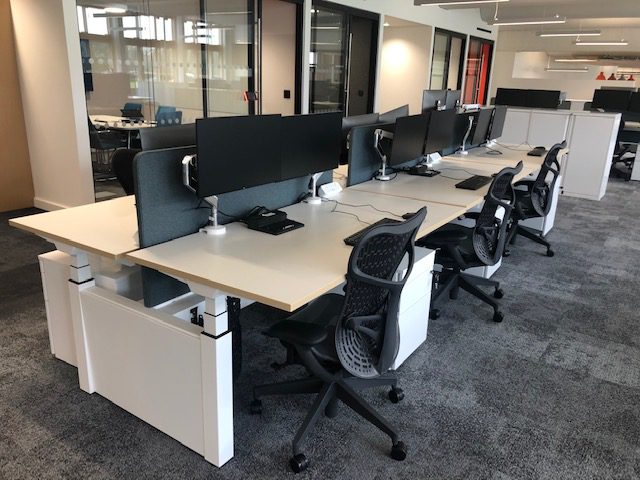
Using productivity to calculate office cleaning hours
In these challenging times value for money is as important as ever, and ensuring you are paying the right amount for your office cleaning to deliver the standards you require is vital. This blog looks at why commercial contract cleaning companies should be using productivity to calculate office cleaning hours for quotes, rather than visual inspection.
Productivity matters because it enables accurate calculation of the cleaning hours required for any project. This helps to identify and implement operational efficiency by using appropriate equipment, materials, processes and training. There are many variables and of course no two offices are the same.
The drive for successful contractors is to find new innovations and techniques that enable cleaning teams to achieve high cleaning standards in less time for the optimum outcome.
How to calculate office cleaning productivity
Define the office space
Productivity is based on size, square footage or square meterage, so the start point is to establish the office space size that the quote will cover. This should eliminate all areas not included in the cleaning specification, for example server rooms or technical areas.
Measuring the office space
When architect office plans are unavailable or out of date, the only way to start is to measure the space manually. This can be done by walking around the premises using a small lightweight laser distance measuring tool. At a click of a button the essential measurements can be obtained and recorded.
Determine area splits
The next stage is to understand the percentage split by area, as each has a different cleaning productivity which affects the cleaning hours required. Washrooms for example have much lower productivity than corridors. The different areas would be for example
- Office
- Washroom & changing rooms
- Corridors & stairs
- Meeting rooms
- Reception areas
- Kitchens
What is cleaning productivity?
What is productivity in relation to cleaning? According to the British Institute of Cleaning Science (BICSc), the average productivity rating establishes the amount of area covered by one trained cleaning operative in one hour.
In general terms, this is typically around 230-250 m2 per hour. However, the productivity varies enormously depending on a wide variety of factors. Some examples shown below.
Factors which affect cleaning productivity
Client expectation and cleaning standards
Detailed specifications are essential to accurately calculate productivity. This is what will deliver the cleaning standards. A project with client-facing areas may have a much higher specification that a cost-conscious one who requires only the basic service. And clients who have invested heavily in a high-end office fitout or refurbishment will demand very high cleaning standards of their prestigious office.
Density
High density open plan office space means rows of desks tightly located together. Each individual desk requires cleaning and sanitisation. And in these pandemic times, partitions have been introduced to minimise infection and of course these need to be made safe to ensure workplace hygiene.
Client specifications
Understanding all the elements of the specification is important and additional items for consideration include:-
- Cleaning and restocking coffee machines
- Practicality - Are there individual or communal waste bins, location of cleaning cupboard etc
- Do fridges require cleaning and disposing of food at the end of the week
- Availability of areas to clean, eg late-running meetings
- Is a daytime presence required for sanitisation of high contact touchpoints

Building age, type and layout
Older buildings typically take longer to clean than newer ones thanks to things like quirky design with awkward nooks and crannies, uneven floors and old-style materials. Types of buildings are office, schools and healthcare facilities, each of which have specific cleaning requirements. Finally, layout plays an important role in productivity as open plan offices are generally working at higher productivity rates than older style configurations.
Temco Bespoke Quotation Tool - TemQuote
Temco has developed a bespoke quoting tool TemQuote to accurately calculate cleaning hours required for each quotation. We take building measurements as a starting point, determine the percentage split by area and overlay the client specification and expectations. This provides the hours required for the project. The resulting figure incorporates the latest innovations and cleaning techniques to ensure that the service specification is delivered at the highest achievable productivity levels.
For successful bids these figures provide valuable information to ensure the staff schedules and workplans are effective, efficient and achievable.
If you are looking at your cleaning provision, please call us now on 01895 520370 or email hello@temco-services.co.uk. We’d love to talk cleaning with you!


Cleaning Collaborative Spaces – 3 things you need to know
The impact of COVID-19 continues to reshape office space. Workplace trends are for agile, hybrid, social offices for use as hubs for collaboration and communication rather than the traditional desk setting. With so many workspaces fundamentally changing their design, this blog looks at cleaning collaborative spaces and the 3 things you need to know.
Hybrid Working and collaboration – the new office role
Hybrid working allows staff to work flexibility, splitting their time between working remotely and the workplace, and allows them to choose where best to complete their work.
The office still plays a key role for face-to-face meetings and training. As collaborative hubs, office are places were people gather to solve problems, create solutions and discuss opportunities. And collaboration plays a crucial role in productivity. Collaborative energy, getting together to brainstorm ideas on whiteboards, leads to innovation and improvements.
Cleaning collaborative spaces – 3 things you need to know: Visibility, Flexibility and Efficiency
Cleaning is no longer about visible dirt, and it requires a very different approach to provide the levels of assurance that returning staff demand and expect. To make staff feel confident, keeping collaborative spaces safe and hygienic is vital. Here are three things you need to know:-
-
Visibility in office cleaning – daily presence to give confidence
Cleaning is changing post COVID. Previously schedules were focused on cleaning desks and other fixed locations, and this generally took place out of hours. Requirements now are for daytime visibility with cleaning staff regularly sanitizing touchpoints and busy communal areas. Where budgets allow, some workspaces are insisting on a continual daytime cleaning presence to ensure that spaces are always safe and ready for use. Typical flexible working spaces include:-
- Collaboration zones
- Break out, chill out and social areas
- Formal meeting rooms
- Informal meeting spaces
- Work pods incl acoustic pods
- Team working benches
- Kitchen and café areas
-
Flexibility in office cleaning schedules – matching cleaning to office usage
Changing space needs a change in cleaning approach. Having flexible cleaning schedules which can adapt to office usage is essential. The new hybrid office interior layout differs from the traditional one in many ways, below are some examples:-
- Booths and work pods instead of desks.
May require additional time to fully clean and sanitise as this includes the walls, floor, door, desk and seating area
- More soft seating and upholstery
Upholstery can quickly become stained and dirty and this does not give a welcoming impression. More frequent cleaning of soft seating is necessary to match the increased usage and maintain a healthy, fresh environment.
- Storage lockers
In traditional office spaces, even in open plan areas, individuals had their own assigned storage space eg pedestals with cleaning scheduled weekly. Storage is evolving and shared solutions are now more common. There is a requirement for daily sanitisation of handles, keypads or manual dials to maintain surfaces free from germs and give staff peace of mind.
- Benches and screens
Informal spaces with benches mean that many people may use the same space so these need to be frequently cleaned in-between use. Where traditional desk seating remains unchanged, safety is provided with screens or dividers to reduce the risk of any cross infection.
- Meeting room booking system screens
To ensure touch screens are safe, the cleaning teams will schedule regular wipe downs with sanitizing solutions

-
Efficiency with office cleaning materials and equipment – the right products at the right time
Daily cleaning and sanitizing materials need to be effective anti-viral proven to kill coronaviruses and conforming to EN14476. Touchpoint cleaning is the regular sanitisation of frequently touched surfaces such as door handles, entry screens, shared switches and kitchen appliances.
Investing in mobile fogging machines on site will enable quick reactive sanitisations of areas.
Finally ensuring sufficient stock of hand sanitizer, wipes and PPE provides further reassurance for staff. In addition, ensuring good supplies of soap and regular checks to ensure they don’t run out should be a daily task for office cleaning teams.
TemcoUK Facility Services has experience of cleaning collaborative workspaces
Many of our clients are adapting or refurbishing their workspace to accommodate the new requirements post COVID. We have a lot of experience of cleaning collaborative spaces, managing the changing cleaning requirements and working in close cooperation with the FM team to understand the individual daily demands and amend our schedules accordingly.
If you would like to discuss your cleaning or are considering a change of provider, please contact Temco today 01895 520370.
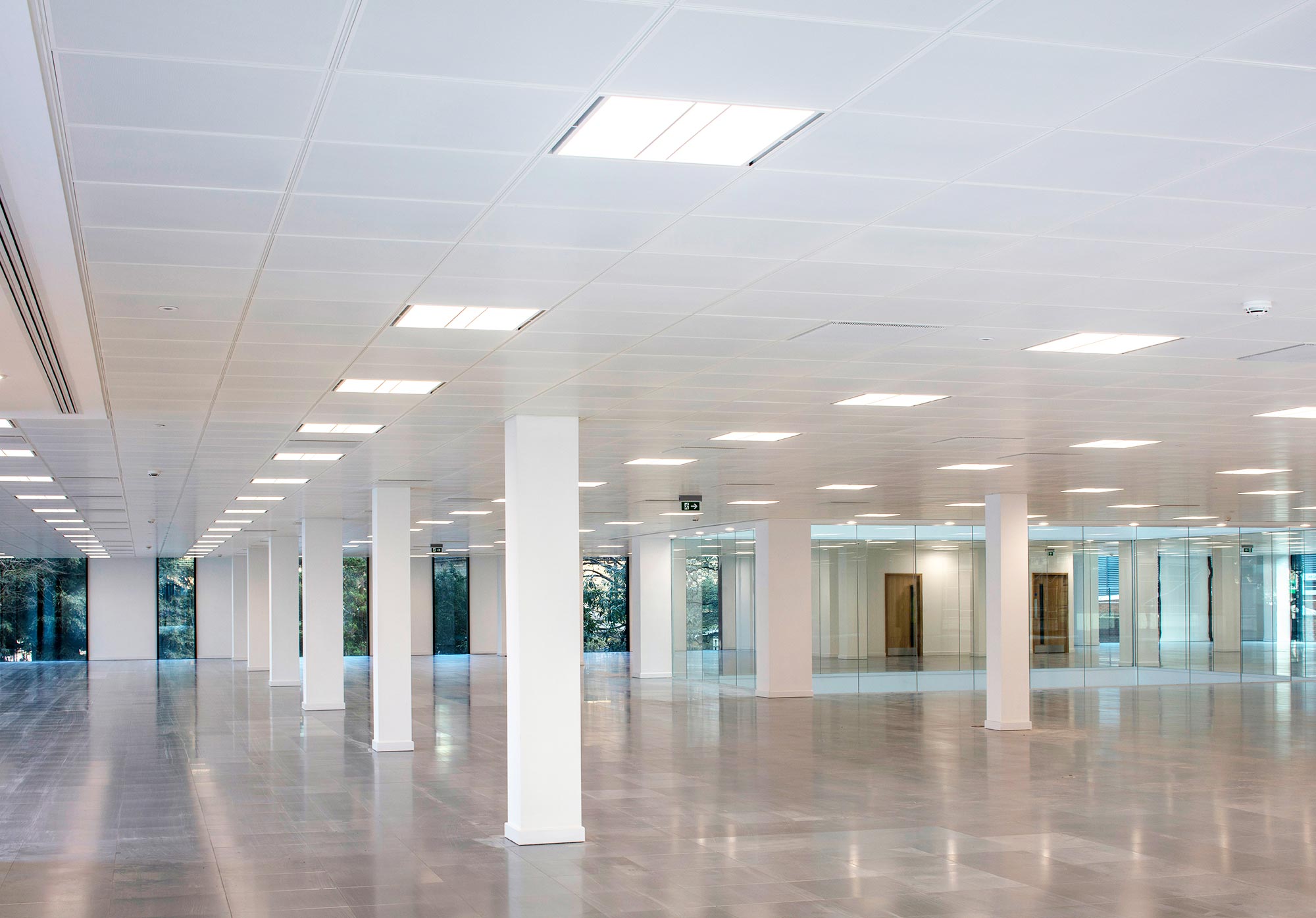
What is a Commercial Builder and Sparkle clean?
Construction and building is messy work! For any office or other commercial renovation or refit project, there will be a lot of dust and dirt created. Cleaning is the final task to make the premises tidy and presentable and ready for handover or occupation. There can be a lot of confusion over what is included, so this blog explores what is a commercial builder and sparkle clean and what does it include.
The Building Phase
Cleaning should not be booked until all contractors and trades are finished with the construction work or renovation. This includes for example all the mechanical and electrical (M&E) works, carpentry, plastering, roofing, painting and decorating and the commercial refurbishment teams.
Builder and Sparkle clean specification
With so many elements to a builders clean, the scope varies enormously from client to client. This is why it’s vital to agree a cleaning specification in advance which is tailored to the specific project. Having a pre-agree specification will provide clarity to all parties. This will list all tasks included in the commercial builder and sparkle clean, which are typically the following:-
Internal tasks
- Clearing away debris and rubbish from the building work
- Vacuum carpets
- Mechanically scrub and clean hard floors with a scrubber dryer
- Damp wipe office surfaces such as desks, chairs and cupboards
- Clean internal glass partitions
- Remove all dust and visible marks including cupboards inside and out
- Clean all areas including stairwells, corridors and lift lobby area
- Clean washrooms including tiled area, sanitary units, appliances and partitions
- Deep clean kitchen including surfaces, appliances and shelves
- Clean internal windows including frames to remove dirt, paint splashes and adhesive residue from sticky duct tape
- Clean high-level fittings eg lights, ceiling tiles and air conditioning vents
- Removing old corporate branding such as vinyl graphics or glass manifestations
External tasks
- Window cleaning to leave clean and streak free
- Gutters, soffits and fascia cleaning to remove any construction mess
- Pathway and walkway jet-washing and resanded if necessary
- Litter picking of car parks, bike stores, smoking areas and patios
- Cleaning meeting booths or collaborative outdoor pods
Sparkle clean
Sparkle cleaning is the final step to delivering an immaculately clean area, from floor to ceiling. Often dubbed the handover clean, the aim is to give the project the ‘WOW’ factor. This work will include many elements of the builders clean such as cleaning window sills, removing finger marks, cleaning door handles and door vision panels. It may also include removing site health and safety signs and cleaning the adhesive marks left behind.
Attention to detail
Professional cleaning teams must be thorough and leave all surfaces clean and tidy, free from visible marks and dust. With larger areas sometimes it’s easy to miss small marks and stains, so leaving time at the end for a final check will pick up the finer details and ensure all parts of the specification are met.
TemcoUK Facility Services provides builder and sparkle clean services
TemcoUK provides builders and sparkle cleans to commercial property following construction work, office refurbishments or brand-new builds. Fully insured and trained with specialist cleaning equipment, our expert team provide professional cleaning services to get your office back up and running and ready for use.
Health and safety is our highest priority. We prepare Task and site specific Risk Assessment Method Statement (RAMS) and brief our team before any work starts onsite. And we follow all relevant health and safety control measures and wear the appropriate PPE as directed. We are SafeContractor and CHAS accredited as well as ISO9001 and ISO14001. Furthermore we are CIS (Construction Industry Scheme) registered for ease of invoicing.
All work will be accompanied by a report on completion showing before, during and after images and comments.
We often work out of hours to minimize disruption on site and will work with you to ensure we meet deadlines.
Temco has a wealth of experience of working with a wide range of clients from open plan office renovations to total refits. Following a free site survey where we will discuss your requirements and understand your objective, we provide a quote accompanied by a detailed specification.
If you need to arrange a builder sparkle clean, contact Temco today for a quote 01895 520370.
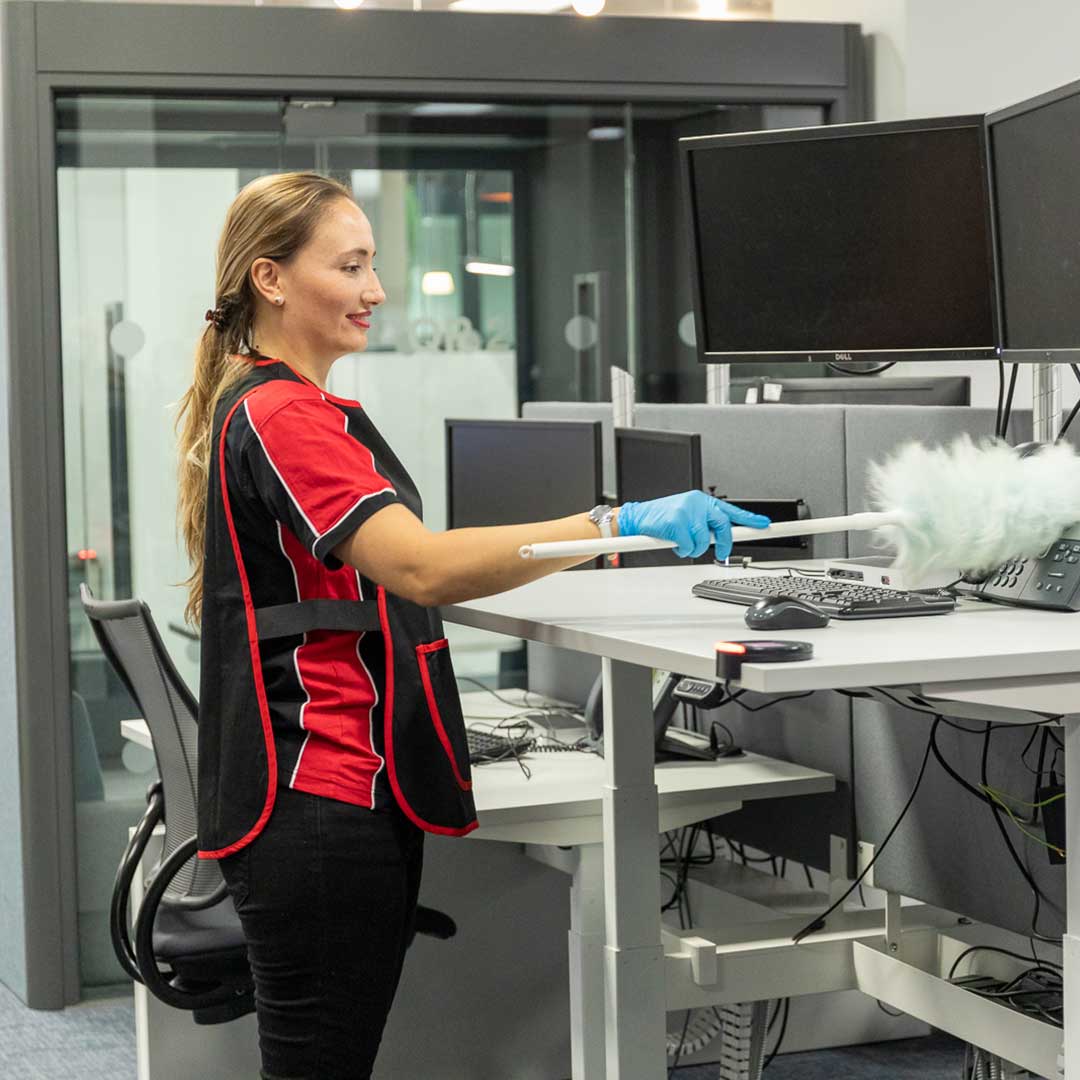
8 questions Facility Managers should ask contractors when tendering office cleaning
The pandemic has further highlighted the important role played by professional Facility Managers, and office cleaning is just one of many services that FM’s are responsible for. In this blog we take a look at 8 questions Facility Managers should ask contractors when tendering office cleaning.
Choosing the right office cleaning contractor often starts with a formal document such as a Request for Quotation (RFQ) or Invitation to Tender (ITT).
Here are some important questions to ask.
1) How will the office cleaning contractor deliver the service?
How to deliver the cleaning specification is fundamental. Sample cleaning schedules and work plans should be part of the return document, as well as a proposed shift pattern and staffing profile. This can be amended by the successful contractor as necessary to reflect unique requirements, but the basic information should be in place from the start.
2) How will the contract be supported by Managers and Head Office?
One of the most common reasons why clients get frustrated with their cleaning contractor is that the staff are not supported by their cleaning manager or the head office. A monthly review of the contract keeps the lines of communication open and are ideal opportunities for service issues to be discussed or amended if situations change.
One way to monitor is through Quality Audits, to systematically ask a range of questions relating to the cleaning standards, room by room or floor by floor. They also help by engaging teams to work together to achieve service excellence.
The Manager has a crucial role to ensure that cleaning products are in stock, that staff training is up to date and that payroll is accurate. Incorrect pay is one of the most demotivating issues for staff.

3) Does the office cleaning contractor have the relevant accreditations & organisational structure
Core information to demonstrate that correct documentation is in place, and would include:-
- Professional accreditations – for example ISO9001, ISO14001, SafeContractor and Contractor Health & Safety Assessment (CHAS)
- Insurance – Employers Liability and Public Liability
- Financial stability – checking a credit-worthiness score gives an indication of financial strength and checking accounts at Companies House provides further insight
- Policies and corporate standards –for example in relation to environmental and sustainability issues, data protection, right to work and many more.
4) Health and Safety
Having the correct health and safety documentation in place is vital. This will include Control of Substances Hazardous to Health Regulations (COSHH), valid task and site risk assessments are in place and staff have been trained on Safe Systems of Work (SSOW). Risk Assessment and Method Statement (RAMS) should be available for all periodic work.
5) How will the account be managed?
Contracts are managed via Key Performance Indicators (KPI) and Service Level Agreement (SLA) which give information on how the contract is performing against pre-agreed targets. These should be available on a regular basis, for example in a secure online portal, and reviewed at client meetings.
Open communications and proactive management are also vital for successful contract management.
6) Onsite staff training
Training ensures compliance and consistency and reduces the risk of injury at work. Staff training would include health and safety, effective cleaning including COVID, chemical expertise and site safety and security procedures.
7) Professional Equipment and chemicals
Using professional equipment and chemicals which have been selected for the specific environment will raise the cleaning standards and enhance the customer experience. With so many products available, asking questions early in the tender process will identify if these comply with the tender requirements, for example do they have the desired environmental credentials?
8) Wide range of services
Finally, having a contractor who can offer additional facility management services makes it easier to manage the contract. Examples are high-level window cleaning or pest control. Additionally, finance teams will prefer one consolidated supplier invoice.
Professional office cleaning services from TemcoUK Facility Services
Temco has been delivering professional office cleaning services to a wide range of clients across many sectors including pharmaceutical and corporate clients.
We professionally manage our contracts with transparency and maximise operational efficiency. Our area managers schedule visits at least monthly to client sites and we have an excellent record of contract management.
If you are looking to change providers, please get in touch.